
Written on The Back of Something Soggy!
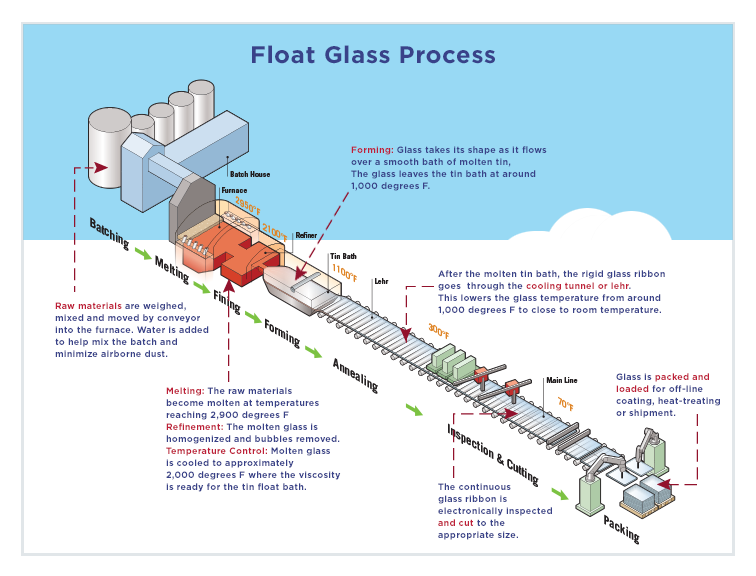
Back in 1952, a chap by the name of Alastair Pilkington did something rather spectacular for the glass industry — he revolutionised it while elbow-deep in dishwater. True story. Rumour has it, he was doing the washing up when the lightbulb moment struck: what if you could float molten glass on a bed of molten tin, like a surreal industrial lava lamp, and make perfectly flat glass without grinding and polishing the hell out of it?
And just like that, the float glass process was born — or at least scribbled down on the back of something soggy.
Now, before Pilkington’s domestic epiphany, manufacturing flat glass was more of a wrestling match than a process. It involved rollers, grinding, polishing, more polishing, and probably a few strong drinks by the end of it. Quality was inconsistent, production was expensive, and the whole thing just screamed unsustainable.
Pilkington’s idea? Pour molten glass onto a bed of molten tin, let gravity and surface tension do the hard yards, and boom — you’ve got sheets of glass as flat as a millennial’s toolbox.
The UK float line kicked off not long after, and by the 1960s, Pilkington’s process had gone global. Today, nearly every piece of architectural flat glass starts its life floating gently across a river of tin — an oddly graceful start for something that’s probably going to be punched, drilled, laminated, or clamped into a 50-storey wind tunnel.
So next time you’re staring at a glass façade or arguing over tolerances, remember: it all started with a bloke, a basin, and a sponge.